Our client came to us with deep domain knowledge in parking operations and a clear product vision: help property owners turn passive asphalt into a cash-flowing asset without the friction of traditional parking systems. We partnered from the earliest strategy conversations through design, engineering, launch, and a clean handoff to the client's company in 2026.
The challenge
Most parking lots leave money on the table. Drivers expect a fast, app-free way to pay. Property owners need enforcement that works without creating tow-first headaches. And operators managing multiple lots need a single system for reservations, violations, revenue splits, and towing partner coordination.
The product had to work for five distinct audiences — guests, tenants, property managers, portfolio operators, and towing partners — each with different permissions, workflows, and reporting needs.
What we built
Polarity is a full parking operations platform deployed at app.polarityparking.com. The guest experience is intentionally mobile-first and account-free:
01
Scan QR code
Drivers scan signage at the lot entrance — no app download required.
02
Enter license plate
Plate verification ties the session to the vehicle on site.
03
Verify via SMS
A one-time code confirms identity without creating a password.
04
Pay and park
Stripe checkout stores the card for extensions, fees, and enforcement resolution.
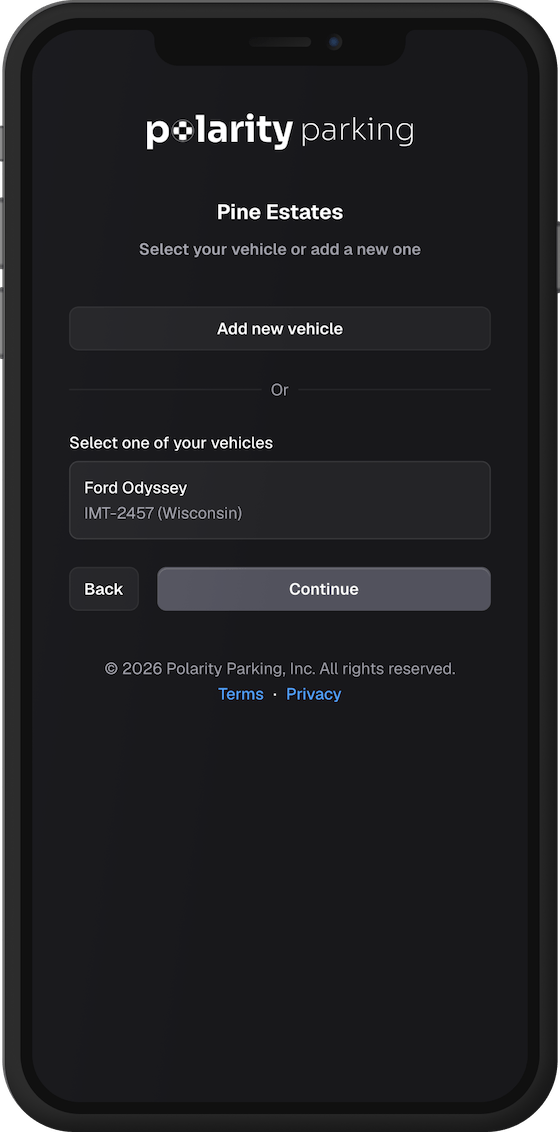
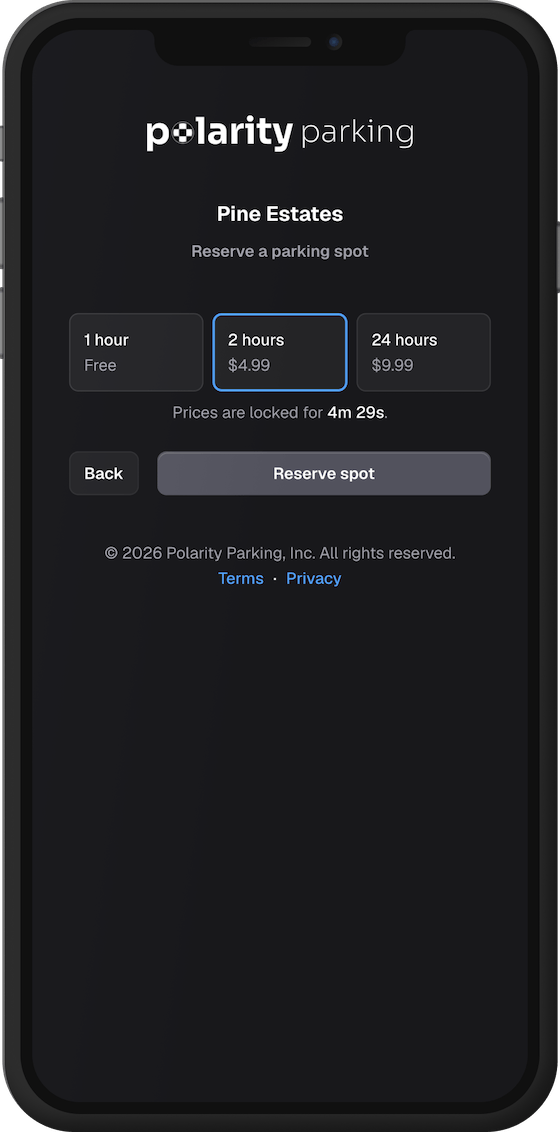
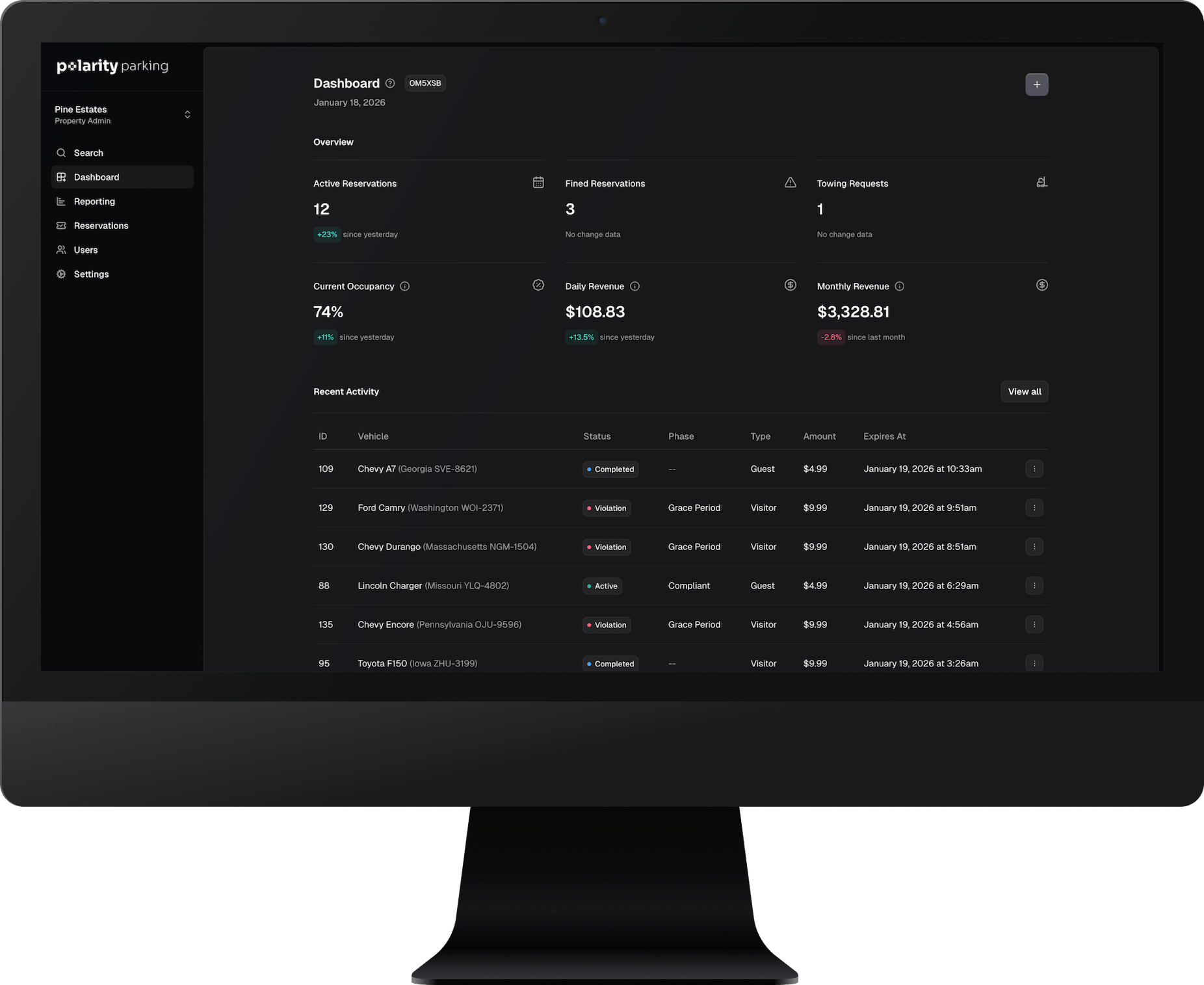
Behind the guest flow, we built five role-based portals for property managers, portfolio operators, tenants, towing partners, and internal administration — each with tailored dashboards, reporting, and action workflows.
Key product decisions
Mobile web over native apps
Guest parking had to work instantly for anyone who scans a QR code. A responsive web app with PWA support eliminated download friction while keeping the experience fast on any phone.
Fee before tow
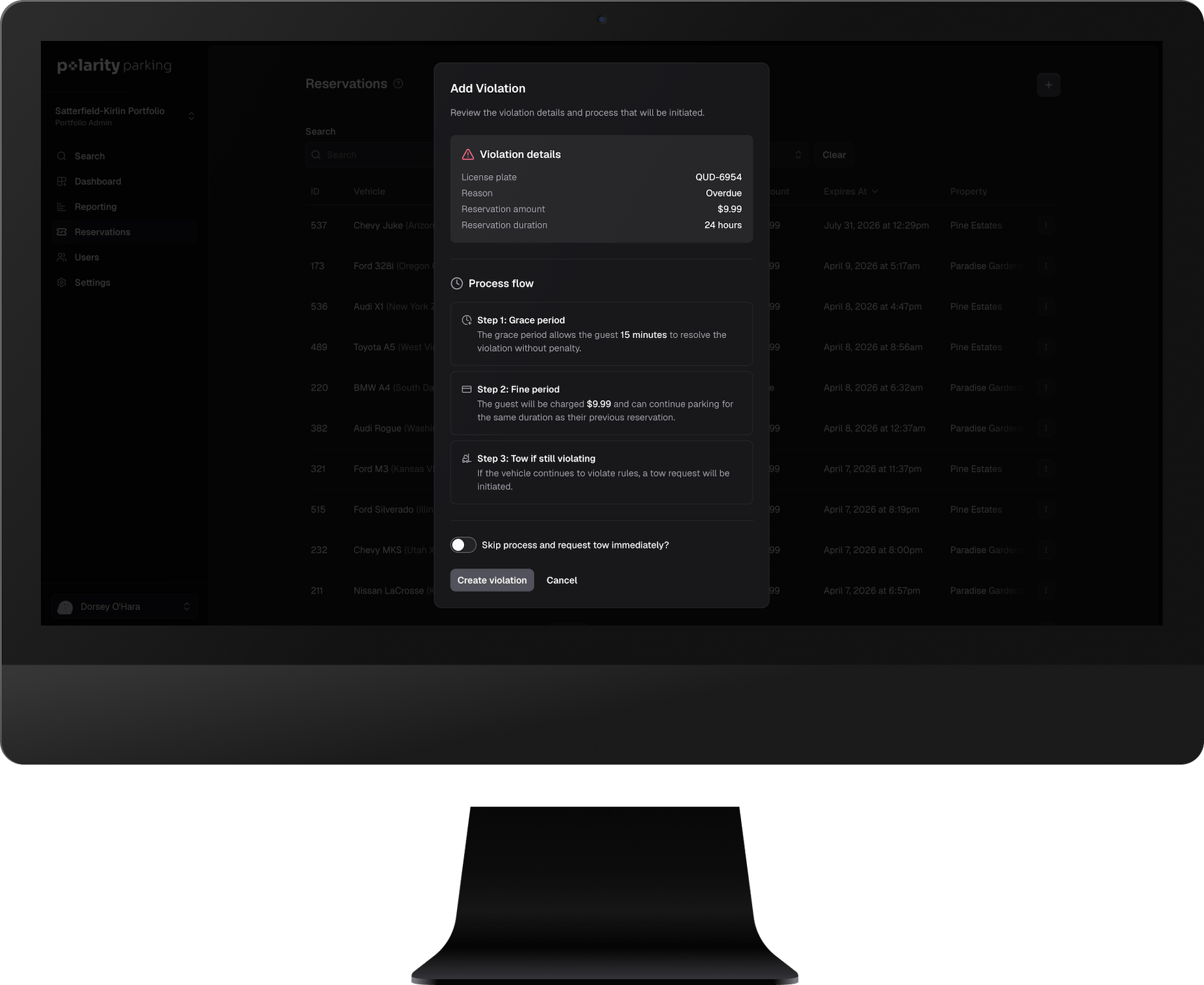
We designed a seven-stage enforcement pipeline: violation, grace period, automated fee charge, tow dispatch, tow-back delivery, and return. Drivers get SMS alerts and can self-resolve before escalation.
Stripe Connect revenue splits
Payments, stored cards, automatic fee retries, refunds, and multi-party payouts flow through Stripe Connect so property owners, the platform, and towing partners each get their share.
Multi-property portfolios
Portfolio operators manage pricing, business hours, enforcement settings, tenant imports, and Stripe onboarding across every lot from a single dashboard.
Towing partner coordination
Tow offers escalate automatically through background jobs. Partners accept jobs, manage tow-backs, and track payouts in their own portal.
Surge and permit pricing
Hourly rates, permits, subscriptions, and volume-triggered surge pricing give operators flexible monetization without manual intervention.
How we built it
We chose Ruby on Rails 8 with Hotwire (Turbo + Stimulus) and Tailwind CSS for a server-rendered stack that stays fast, maintainable, and easy for a small team to operate long term. PostgreSQL powers the data layer. Solid Queue handles background jobs for enforcement escalation, reservation lifecycle, SMS reminders, and payment retries. Twilio delivers transactional SMS. The platform runs on Render with separate web and worker services for production and staging.
5
Role-based portals
4 mo
Active development
15+
Background job types
41
Domain models
Quality was built in from the start: GitHub Actions runs security scanning, linting, and full system tests on every change. We structured the codebase for a clean ownership transfer when the client moved infrastructure to their own company in May 2026.
Our role
The client brought parking industry expertise and the initial product concept. We helped refine the strategy, designed every portal and workflow, and built the entire platform — from the passwordless guest checkout to portfolio reporting, enforcement automation, and towing partner dispatch. Hardihood owned product design, engineering, and delivery end to end.